To the website of the Church of St John and St Mary, Stiffkey
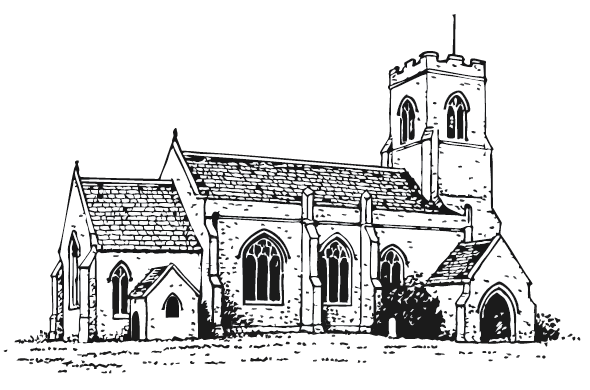
Stiffkey’s church stands high above the winding valley and saltmarshes of the North Norfolk coast, looking down toward the meandering River Stiffkey as it makes its way to the sea.
The village itself was established by the time of the Norman Conquest, and was mentioned in the Domesday Book published in 1086.
The significance of the site on which the church stands is likely much older still, and it is thought that this location has been a place of worship since pre-Christian times.
Unusually, our churchyard once contained two churches, St John and St Mary, which stood side by side. Over time one fell out of use and was formally deconsecrated in 1563. The building was gradually removed as it fell into disrepair, and the remaining traces can be seen in the form of the grassed mound at the eastern end of the chancel.
The church displays many of the characteristic of Norfolk churches: flint walls interwoven with dressed stone and mellow red brick. The porch and parapets display beautifully knapped white flints that catch the changing coastal light. The porch itself dates largely from the early fifteenth century, when Stiffkey prospered through farming and coastal trade. This beautiful building holds Grade I listed status and is one of the ten churches that make up the Benefice of Stiffkey and Bale, which in turn is part of the Holt Deanery.
Inside, the church reflects centuries of village life and local history. Fragments of medieval stained glass survive in the south windows, including several delicate fifteenth-century heads rescued from the earlier church. Memorials throughout the building tell the stories of generations connected to the valley, including the striking black marble monument to Sir Nathaniel Bacon of nearby Stiffkey Hall, an influential Elizabethan figure remembered both as a landowner and patron. Curiously, the inscription left a blank space for the year of his death.
The churchyard also contains the grave of one of Stiffkey’s most famous and controversial former rectors, Harold Davidson. Davidson became nationally notorious during the 1930s after devoting much of his time to helping vulnerable young women in London. Following a highly publicised ecclesiastical trial at Norwich Cathedral, he was removed from office for alleged immorality. Determined to defend his reputation, he spent his final years giving public performances and lectures before tragically dying after being attacked by a lion at a seaside show in Skegness — a story that remains one of Norfolk’s strangest historical episodes.
Beyond the east end of the church lies a quieter side of Stiffkey. The churchyard, maintained with great care by volunteers, encourages native wildflowers, butterflies, lichens and traditional grasses to flourish. From here there are beautiful views across the Stiffkey Valley towards the marshes and the coastal path, a landscape rich in birdlife and long associated with walkers, artists and naturalists. In spring and summer the surrounding valley is alive with birdsong and wildflowers, while the nearby saltmarshes remain one of the defining natural features of this distinctive corner of North Norfolk.